What Happens When Reality Challenges Our Assumptions?
Most people think NeuroDivergence begins with a diagnosis.
Autism.
ADHD.
Dyslexia.
Hearing loss.
Dementia.
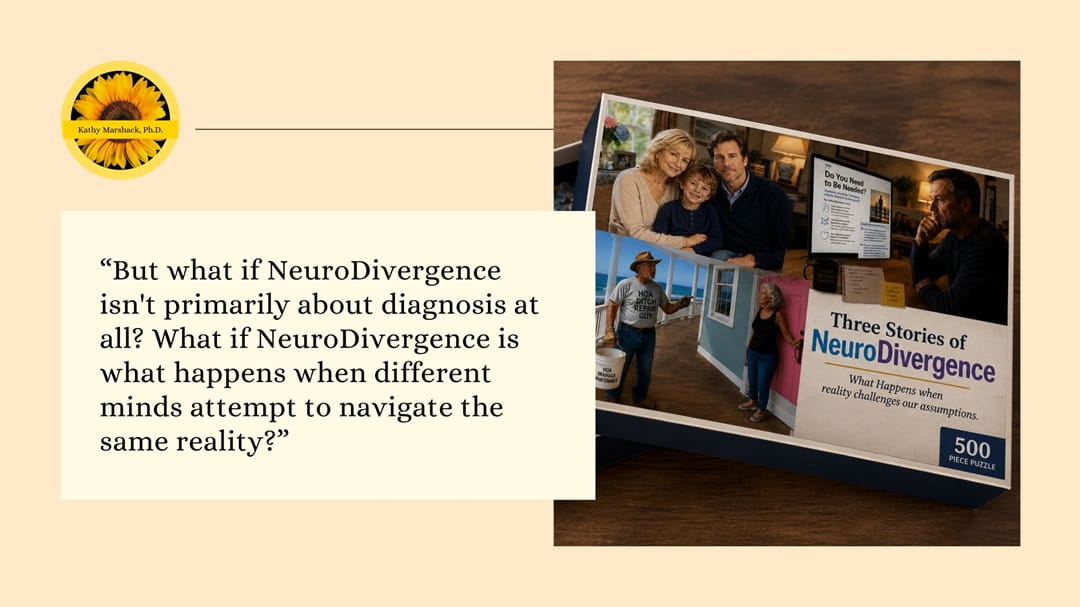
But what if NeuroDivergence isn’t primarily about diagnosis at all?
What if NeuroDivergence is what happens when different minds attempt to navigate the same reality?
Recently I found myself reflecting on three seemingly unrelated stories.
One involved a mother searching for answers about her autistic son.
Another involved a husband and wife stranded on the side of the road after a simple mistake.
The third involved a neighborhood dispute over a drainage ditch.
Different stories.
Different people.
Different settings.
Yet each revealed the same underlying pattern.
Judy’s Story: NeuroDivergence in Families

Judy spent forty-three years trying to understand her son.
Teachers offered explanations.
Professionals offered interventions.
Family members offered advice.
Yet something remained unresolved.
When Judy eventually encountered the idea that her son’s brain processed information differently than hers, the pieces began falling into place.
The issue wasn’t that either of them was wrong.
The issue was that they were operating from different assumptions about reality.
The family system itself had become NeuroDivergent.
Jon’s Story: NeuroDivergence in Marriage

Jon’s story began with a familiar scene.
His wife ran out of gas.
Again.
To Jon, the lesson seemed obvious.
People should learn from their mistakes.
Responsibility matters.
Problem solved.
But his wife experienced the interaction very differently.
What Jon saw as helpful instruction, she experienced as criticism.
What she saw as a plea for understanding, Jon experienced as avoidance of responsibility.
Neither was responding to the same reality.
The marriage had become NeuroDivergent.
Steve’s Story: NeuroDivergence in Communities

Then came the Ditch Repair Guy.
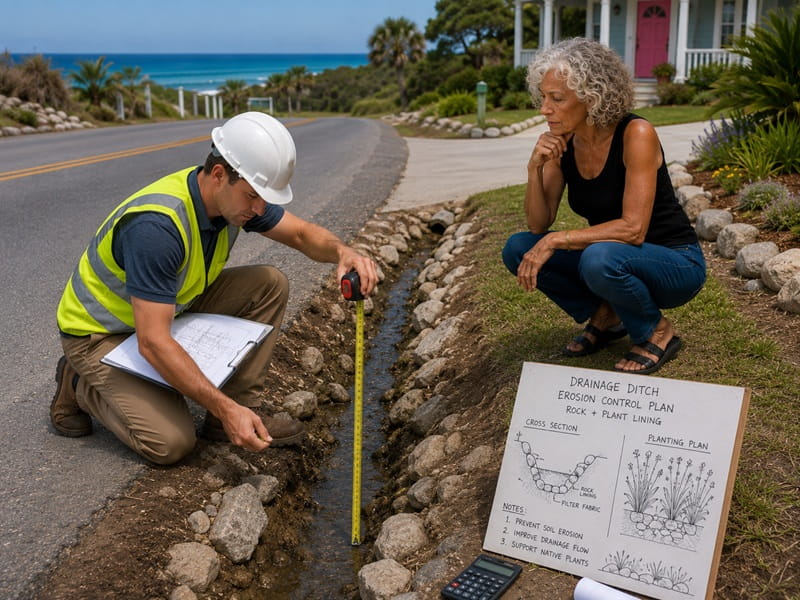
Steve and I looked at the same drainage ditch and saw entirely different problems.
He saw a ditch that needed rocks.
I saw an erosion-control system.
Soon neighbors joined the discussion.
Then the Board.
Then official letters.
The disagreement was no longer about drainage.
It had become a clash of assumptions, priorities, and interpretations.
NeuroDivergence had expanded from two people into an entire community.
Mapping the NeuroDivergent System
In all three stories, the visible problem turned out not to be the real problem.
The son wasn’t the problem.
The marriage wasn’t the problem.
The ditch wasn’t the problem.
The deeper challenge was understanding the system beneath the conflict.
Who held authority?
What assumptions were operating?
Which perspectives were accepted?
Which were dismissed?
When we begin mapping the system, we stop asking:
“Who is right?”
And start asking:
“What reality is each person living in?”
Different Stories. Same Pattern.
The more I studied these stories, the more I saw the same pattern emerging.
Different minds.
Different assumptions.
Different realities.
One shared challenge.
Learning how to navigate NeuroDivergence.
Beyond NeuroDivergence

This is where Radiant Empathy enters the picture.
Radiant Empathy does not require agreement.
It does not require surrendering your perspective.
It does not require pretending that differences don’t matter.
Radiant Empathy begins with curiosity.
It asks:
“What am I missing?”
“What assumptions am I making?”
“What reality is the other person experiencing?”
The goal is not sameness.
The goal is understanding.
Because NeuroDiversity creates differences.
NeuroDivergence emerges in relationships.
And Radiant Empathy helps us navigate the space between them.